Facebook Twitter Gplus YouTube E-mail
formats

7 Steps To Successfully Enjoy Traveling With Your Dog

By Al Skender
Thanks to a surge in the number of pet-friendly hotels and
airlines with pet-friendly policies and improved pet immigration guidelines to facilitate international travel, more people than ever are taking their dogs overseas with them. You still need to do your homework though, if you are planning to travel with your dog.
By planning ahead of time, you can make your vacation a truly relaxing time for you and your furry friends. Here are my Top 7 Pet Travel Tips to help make your trip an enjoyable (and stress-free) endeavor:

Pet Travel Tip #1: Keep Your Dog Secure In The Car
It is usually a good idea to crate or harness your dog when riding in the car. Dogs that are allowed to run loose can be a safety hazard to you, themselves, as well as other drivers. When cracking the window for fresh air (or so your dog can stick his head out), make sure that there is only enough room for the head, and not the whole body. Should you need to brake or swerve suddenly, you do not want your loved one to be ejected out of the vehicle.

Pet Travel Tip #2: Introduce The Crate To Your Dog
It is natural to feel a little hesitant about crating your dog for the first time – after all it looks a bit confining, doesn’t it? However, you may be surprised to know that, if done correctly, a crate can actually be quite comforting for your dog, especially during hectic or stressful times such as holiday get-togethers, thunderstorms, or 4th of July fireworks. In these instances, your dog’s crate (with the door open) can feel like a safe haven or den.
Crate Training How-To: To help get your dog accustomed to the crate, simply start by having it in your house and keep your dog inside as often as possible – with the door open. Don’t shove your dog in the crate… instead, show your dog the crate and open the door. Make sure there is nothing in the crate that can harm your dog. Feed your pooch inside the crate, place their favorite toy or bedding in the crate and incorporate sleep time in crate. Eventually, he will be totally comfortable and this will aid in making the dog feel more secure traveling in the crate.

Pet Travel Tip #3: Don’t Feed The Dog Before A Car Ride Or Plane Trip
This may cause symptoms of nausea and/or vomiting (aka carsickness or airsickness). For pets and people with sensitive digestive systems or those that are prone to carsickness, consider carrying a bottle of Nux Vom oral drops with you to prevent and treat nausea, diarrhea and vomiting. You can find Nux Vom online at www.barfworld.com.

Pet Travel Tip #4: Determine Your Plane Travel Strategy
If you do fly with your dog, he will almost certainly be traveling in a crate so it will make everyone’s lives a little easier if you crate your dog BEFORE you enter the chaos of the airport. Make sure to use the pre-travel crate techniques mentioned above a few weeks before the big travel day to avoid any mishaps. Remember, traveling can be stressful, even if you do try your best to plan ahead. So stay calm. If you’re calm, your pet will have an easier time staying calm as well.

Not sure how your dog will travel in an airplane? Try a short distance flight as a trial run to see how your pooch holds up on board an airplane. You should also make sure to dose him (and any other airplane-nervous travelers in your party) with Rescue Remedy, a natural, non-invasive stress-relieving remedy made from all-natural flower essences – also available on www.barfworld.com. I don’t recommend using harsh sedatives on your pet. They are dangerous, and in most cases, completely unnecessary.

Plan Cabin Travel – During air travel, only very small dogs are allowed in the cabin with their owner. Carrier measurements vary by airline but most airlines restrict the number of dogs in the cabin from one to seven dogs, per flight. Airline companies also vary on their policies of allowing small dogs in the plane, depending on size, weight, etc. Make sure to do your homework ahead of time so that there are no surprises on your big travel day…after all, that’s the last thing you need when you’re ready to go on an otherwise relaxing vacation.

Plane Cargo Travel – Cargo travel for dogs is a whole different story. Large breed dogs are not allowed in the cabin and are instead transported in the same cargo hold as baggage. Doesn’t sound too comfortable, does it? The noisy, dark, and unfamiliar environment may be difficult on your dog emotionally. Also, bear in mind that most airline companies will not let pets fly in cargo during extreme hot or cold weather or during particular seasons especially after reports of pets arriving injured or dying from extreme temperatures in the baggage hold.

With these risks in mind, one might ask: are there other options available to dog owners for airline pet travel? Luckily, regulations in regards to pets traveling on board a flight are starting to be more relaxed. Some airline charter companies actually allow dogs of any size or breed to travel in the cabin with you. During the flight, you can even check on your dog once or twice. The drawback is that the majority of these chartered planes are typically smaller planes like prop planes or Lear jets – and there is generally a higher cost for this type of service.

Travel Tip #5: Help Your Dogs Assimilate To Their Surroundings
Once you’re settled in to your hotel room, suite, or cabin, it can be upsetting (and even a bit embarrassing) if your dog barks or howls in the new, unfamiliar room. It’s important that your dog’s and your scents are everywhere before your dog settles in. To help with the transition, bring their favorite blanket or toy along as it most likely has their scent on the article and will help with assimilating your dogs into their new surroundings.

Travel Tip # 6: Get Plenty Of Exercise
A recently exercised dog will be in a more relaxed state during any long trip. Go for a walk or run and tour the area with your pet. Bear in mind that your dog may growl at strangers…and that’s ok. It’s natural for your dog to be a little nervous around new people and a new environment. Just stay calm yet be assertive and show your dog that you’ve got it covered. Get the dog to stay where he is and, if overly aggressive or anxious, dose him with Rescue Remedy to help lower his stress levels.

Travel Tip #7: Don’t Skimp On Good Nutrition
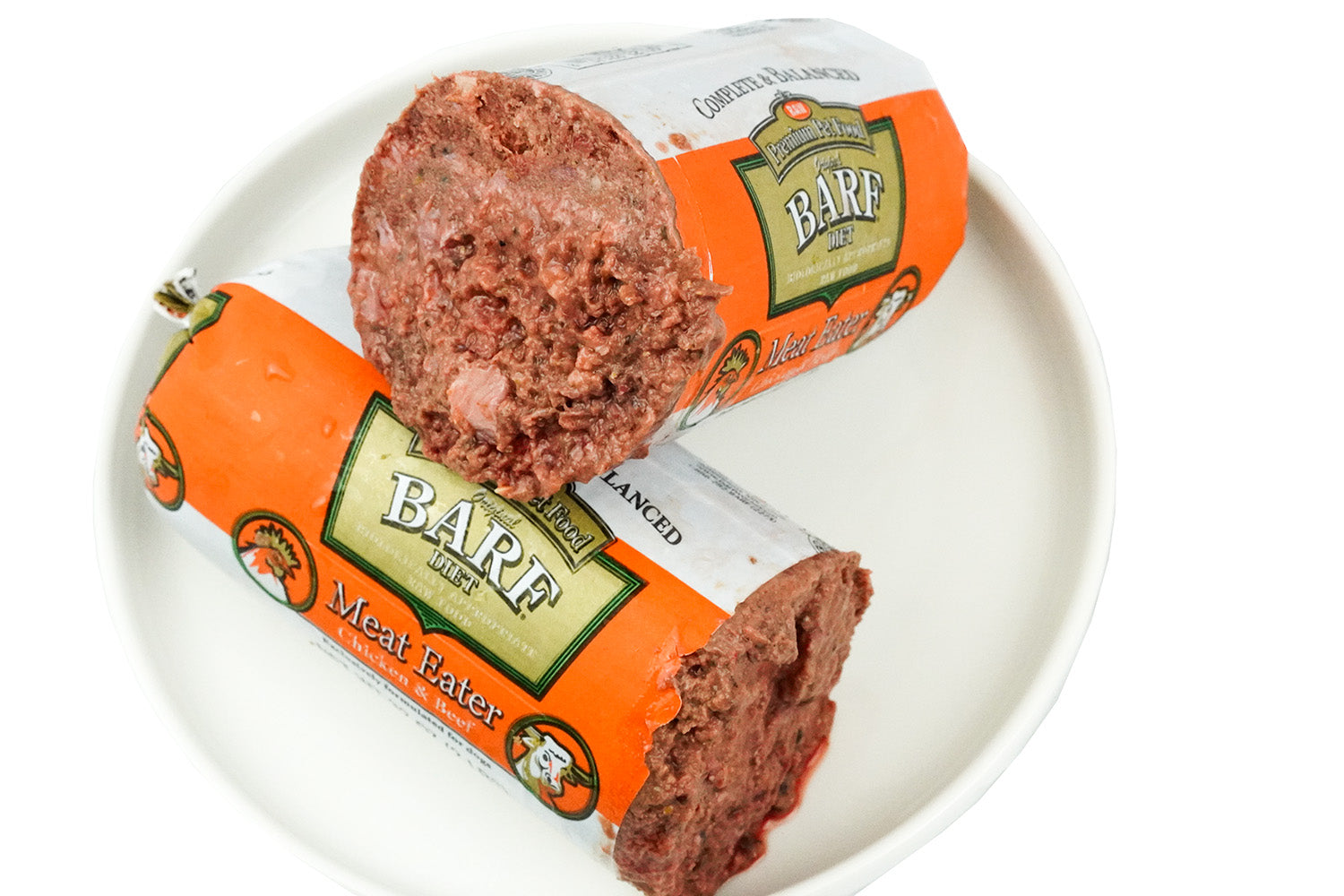
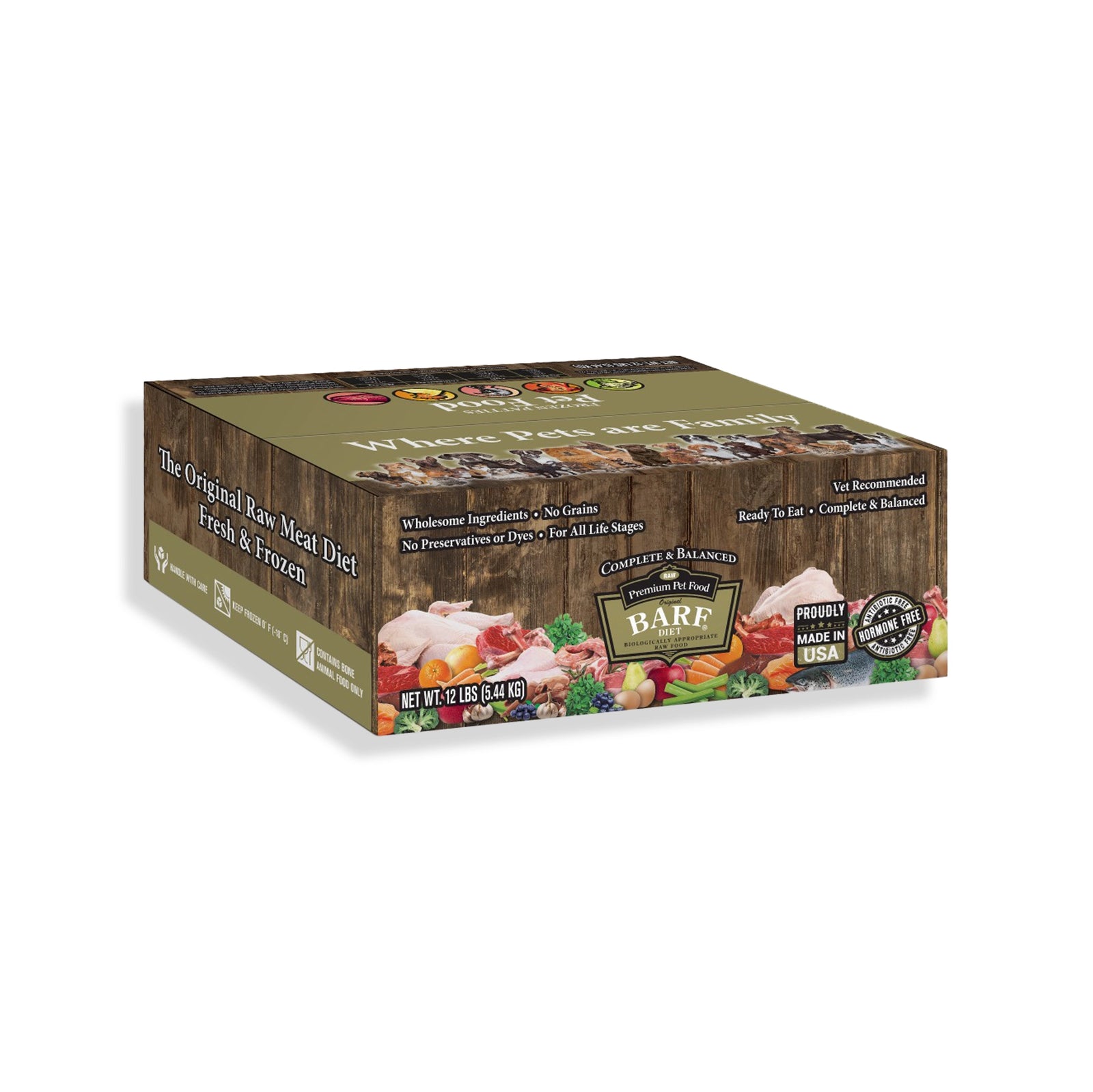
Last, but not least, it’s important to remember that a well-cared for (and well-fed dog) makes the best travel companion. Don’t forget to feed the BARF Diet to your dog while you’re traveling to avoid breaking up his routine. Maintaining your pet’s daily routines is the best way to help ease their anxiety and help them relax during the trip. If you absolutely cannot have the frozen BARF Diet on hand while you’re traveling (think camping or traveling overseas), it’s best to go with a freeze-dried raw alternative, rather than dehydrated, kibble, or canned food diets. We love Sojos complete and balanced freeze-dried raw. While it doesn’t have as high a moisture content as the BARF Diet, it’s as close to raw as you can get without having to worry about storing frozen food. Don’t let the thought of traveling with your dog overwhelm you into not doing do. Traveling with your pooch can be a very fun experience for the both of you. Just use the tips outlined below, do your homework ahead of time and – most importantly – relax. Our pets can sense when we’re stressed and that stress can easily transfer to them, which doesn’t help anyone. Safe travels!

Al Skender is a Raw Diet Educator for BARF World Inc.For more articles like these and to learn more about the benefits of raw food for your pets, sign up for The Intelligent Pet weekly e-zine at www.barfworld.com/ezine.

 
 Share on Facebook Share on Twitter Share on Reddit Share on LinkedIn
No Comments  comments 
formats

Too Much Of A Good Thing? Dog Diarrhea And Vomiting

By Rob Mueller

We have all done it…over-indulged during the holidays. It is not necessarily that we ate too much, but the combination of different foods, rich desserts, and treats can cause uncomfortable results. Is there any reason not to believe that our pets can suffer from the same type of over-indulgence? After all, we love our pets, and the holidays offer us the incentive to treat our pets with love, affection, and extra treats and goodies.

As a human, our GI track responds to this over-indulgence, and the result could be diarrhea and possible vomiting. A dog is equipped to respond the same way. Both acute and chronic gastritis (vomiting) is common in dogs and cats, and there can be several causes. The most common cause of an acute gastritis is related to dietary indiscretion (ingestion of plants or garbage). Of course it can be from over-indulgence of a combination of foods or foreign materials.

Another cause can come from the administration of drugs such as steroids, and antibiotics. If the vomiting is chronic, then a thorough vet workup is necessary. The vet will no doubt suggest a blood work-up, radiographs, ultrasound, endoscopy, a barium study and possibly exploratory surgery. After years of diagnosing the causes of this condition, I have found that simply putting the pet on a natural raw food diet will cure the problem much of the time.

For the human, a remedy could be some Pepto-Bismol, nux-vomica, or similar product to settle the acid content of the stomach. We can do the same remedy for a dog. We have found a nux-vomica formulation for pets that we now include in BARF World’s emergency medical first aid kit.

Another possibility is to let the gastrointestinal (GI) track settle down, much like re-booting your computer. Give it a chance to rest and let the enzyme systems re-adjust to the situation. This involves a one day fast. It doesn’t hurt the dog to allow the GI track to rest. In fact there are several vets and nutrition specialists that recommend routine fasts every week. I personally recommend this approach only when I see that a dog has a GI disturbance or if the dog has a history such as irritable bowel syndrome.

In addition, when offering my advice to guardians that have a dog in distress from vomiting, I offer feeding instructions that are different from normal feeding guidelines. I suggest to feed smaller portions at higher frequency until the GI track has been regulated. In other words, instead of feeding two big meals a day, try four smaller meals throughout the day to give the stomach a break in between.

Like any other organ in the body, if you overtax it, you have problems. The stomach is amazing in that it can function despite a variety of foreign materials and excess volume of contents. The vomiting reflex operates similar to the relief valve on a water heater. The pressure has to be released in order for the organ to function properly. Of course when this happens with your dog, it can also mean a nasty mess for the dog mom and dad to clean us.

So the message for the holidays is to limit the treats for yourself and for your pets…and have the right remedy on hand if you do go a little overboard. Trust me, you will be glad you did.

Robert Mueller, BSc, Pharm. is a registered pharmacist, author of “Living Enzymes: The World’s Best Kept Pet Food Secret”, and co-developer of BARF World’s BARF diets patties, nuggets and supplements – the first company to make the Biologically Appropriate Raw Foods (BARF) diet conveniently available to animals everywhere. He and his wife love to travel around the world with their dog, Moxie – a Yorkshire Terrier/Maltese mix. For more articles like these and to learn more about the benefits of raw food for your pets, sign up for “The Intelligent Pet” monthly e-zine at barfworld.com/ezine

 
 Share on Facebook Share on Twitter Share on Reddit Share on LinkedIn
No Comments  comments 
formats

What Pet Food Labels Really Mean

Pet food is a multi-billion dollar industry. There are some companies who genuinely care about the health and well-being of the pets they impact. There are others companies whose sole purpose is to generate the biggest profit they can. While using cheap ingredients and cutting corners is one way get ahead, another is to generate misleading and fraudulent advertising to deceive their customer base. Here are some of ways that pet food companies trick their customers:

Hormone Free & Antibiotic free

All meats that are fit for human consumption MUST come from USDA facilities, and some pet food companies (including BARF World) use only meat that comes from this trusted source. The USDA has stringent testing procedures in place for all animals that arrive at their facilities, and none may test positive for chemicals. Since many of these chemicals can be flushed from the system in 30-60 days, the animal is simply not injected for that period of time prior to arrival. So while the animal may have been given hormones at some point, there are no traces in the body when the animal arrives for processing.

Many companies claim to be hormone-free & antibiotic-free on their packaging, but not all of them really mean it. Rob even knows of a competitor who makes the claim “contains hormone-free/antibiotic/free meat” if as little as 1 lb. of meat from a 1500 lb. batch meets the criteria, regardless of the quality of the rest of the product. This statement is misleading, and intended to give the customer a false sense of security.

Made with organic ingredients

Technically speaking, in order to be able to include this on a label, a product needs to contain only 70% organic material. The other 30% can be made up of artificially synthesized ingredients. This method of processing is not what we think of when we hear the word” organic”. There are companies that use the terms “made with organic ingredients” or “made with organic vegetables”, which does not necessarily mean that the meat is organic at all. These companies count on people to simply scan the packaging for the word “organic”, and keep their fingers crossed that the customer will not read beyond that.

One other important thing to note is that the difference between hormone-free/antibiotic free and organic is small…much smaller than public perception. The most important thing is to make sure that there are no chemicals in the food, and both types of meat meet that standard. I mention this only because 100% organic ingredients are extremely difficult to find. The reality of the situation, though, is that if you want 100% organic food, you are going to pay a premium for it (or grow it yourself).

Order of ingredients

It is important to note that ingredients are listed in terms of weight, not volume. In other words, a bag of food could be mostly fillers, but the chicken is listed as the primary ingredient simply because it has a higher weight. Allow me to illustrate further. For example, Let’s say that you picked up a large sack filled with feathers, and at the bottom of all the sack, there is a brick. If there was a list of contents on the back, the brick would be listed first because it weighs more than the sack full of feathers, despite the fact that the feathers comprise the majority of the space in the sack.

When you read a pet food label, the first ingredient should be a protein source. If you are seeing any grain (rice, wheat, corn) or starch (potato, sweet potato, yam), know that this is designed to make your dog feel full, but that your dog will also have a more difficult time digesting it, and will not have proper nutritional balance. This can cause serious long term problems, but that is a story for another day. Also be aware these ingredients will comprise a large portion of the diet by volume, even if a meat source is listed first.

Protein Meal

Many dog food companies will use chicken meal, lamb meal, or some other kind of meal in their products. Many people do not know what the difference between chicken and chicken meal is. Most “meal” is rendered. The rendering process includes taking fat trimmings from cuts of meat, chopping them finely, heating them, and spinning them in a centrifuge to separate the water and the fat from the product. The result is protein meal. The scary part about this is that not all protein meal comes from the source you think it does.

When vets have to euthanize a dog, many use a drug called Pentobarbital. While some owners choose to bury or cremate their dogs, others leave the animal with the vet. These animals have to go somewhere, right? Indeed they do…they are sent to rendering plants. That’s right…some of the protein used to make meal can come from euthanized dogs. Furthermore, the Pentobarbital does not completely break down during the heating process, so traces of the drug can be found in protein meal.

Some of these facts are really scary. The good news is that most of you don’t have to worry…BARF World has always been transparent about our ingredients, and it shows in the thousands of dogs who thrive on the BARF Diet. Until next time…happy BARFing.

Evan Price is a Raw Diet Educator for BARF World Inc. He is a true dog lover at heart with a particular interest in Daschunds. Evan is also an avid sports enthusiast and bridge player. For more articles like these and to learn more about the benefits of raw food for your pets, sign up for The Intelligent Pet weekly e-zine at www.barfworld.com.

Robert Mueller, BSc, Pharm. is a registered pharmacist, author of “Living Enzymes: The World’s Best Kept Pet Food Secret”, and co-developer of BARF World’s BARF diets patties, nuggets and supplements – the first company to make the Biologically Appropriate Raw Foods (BARF) diet conveniently available to animals everywhere. He and his wife love to travel around the world with their dog, Moxie – a Yorkshire Terrier/Maltese mix. For more articles like these and to learn more about the benefits of raw food for your pets, sign up for “The Intelligent Pet” monthly e-zine at barfworld.com/ezine

 
 Share on Facebook Share on Twitter Share on Reddit Share on LinkedIn
No Comments  comments 
formats

Puppy Tummy Ache? Reach For Pumpkin, Not Pepto

With Halloween right around the corner you’ve no doubt seen the stores stocking up on pumpkins for the festivities. Pumpkins are plentiful this time of year so it seems like an appropriate opportunity to talk about this delicious and nutritious diet ingredient for our canine and feline companions.

Pumpkin has been described as a mystery food for dogs as it is very unusual to find an ingredient that is able to control symptoms of diarrhea as well as constipation.
(more…)

 
 Share on Facebook Share on Twitter Share on Reddit Share on LinkedIn
No Comments  comments