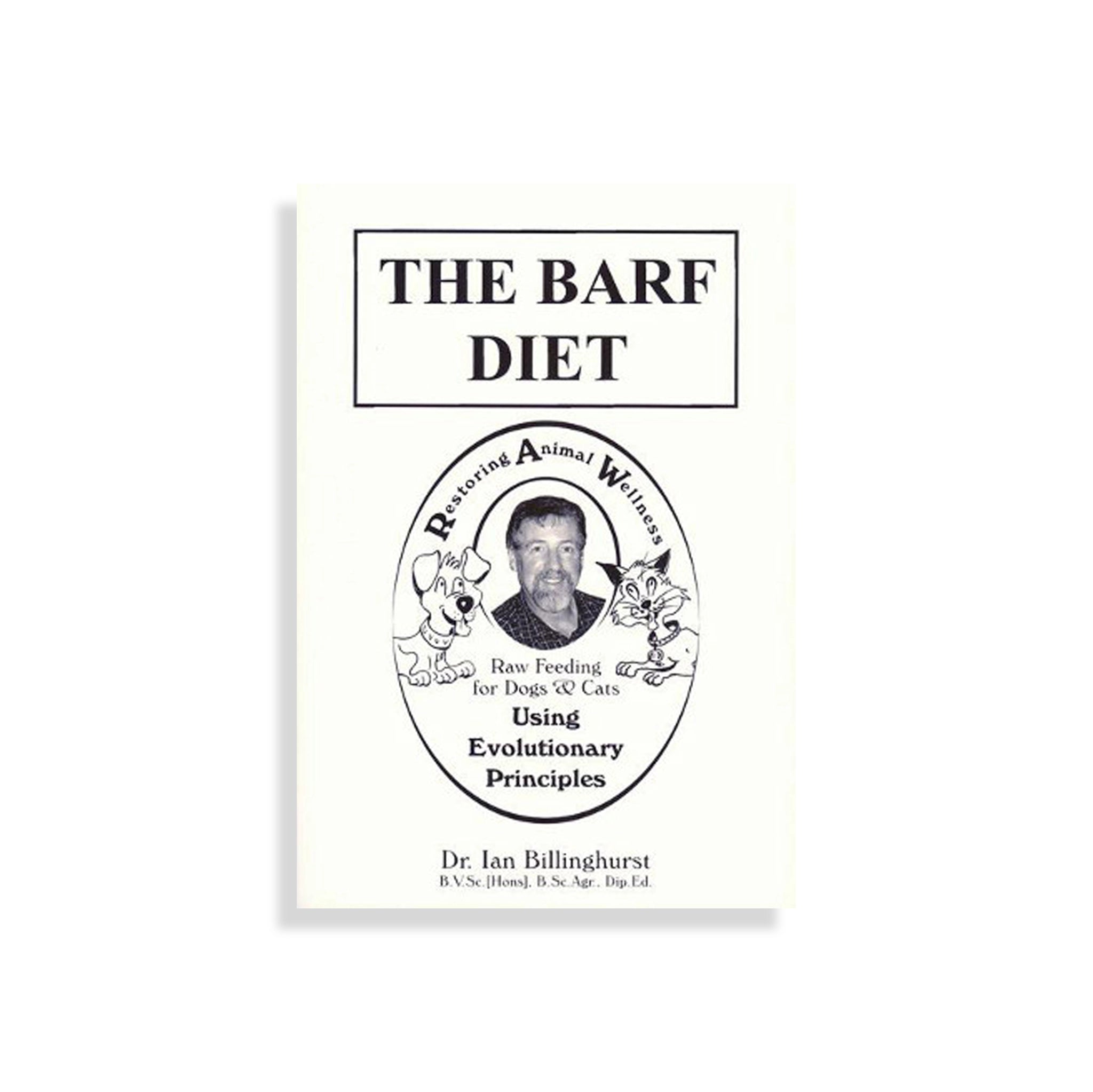
|
By defining something or somebody-
you are also limiting it. That is why I try not to be defined.
However, if I am to be defined (and therefore limited) then
I have to admit that by profession I am a Veterinary Surgeon.
I am also a writer and a lecturer with my favorite topic being
the nutrition of pet dogs and cats. My most important piece
of writing is the book Give
Your Dog a Bone. This book has changed the thinking
of tens of thousands of people worldwide. More importantly,
it has improved the health of these peoples dogs. Many of
these people now look to me as the authority on feeding pets
their evolutionary diet. Some say that Give
Your Dog a Bone has become their Bible.
The fact that an evolutionary diet promotes
health comes as no surprise. That a grain based product such
as commercial pet food is destructive to a dogs health should
also be no surprise. However, clever marketing (combined with
very poor science) has resulted in these atrocious products
being the major source of food fed to most pets in developed
countries. And yet, feeding our pets according to the dictates
of evolution (which is sound science in every sense of the
word) is currently regarded by some as a fad, which they assume,
will be short lived. I don't think so!
How
did I arrive at the point where Give
Your Dog A Bone could be written? My high school
years were spent at an agricultural high school (Hurlstone)
on the western outskirts of Sydney. Here my love of plants,
animals and all things natural was fostered through working
with cattle, pigs, poultry, sheep, the market garden the orchard,
and more formal studies in agriculture and biology. There
was never any question. My career would be both biological
and medical.
I did not start out as a vet. In 1966 I graduated
from Sydney University with a degree in Agricultural Science.
I spent that year as a research Scientist at Orange Agricultural
Research Station about 200 miles west of Sydney. The next
four years were spent as a high school teacher during which
time I obtained my Diploma in Education. However, despite
having a young family, the desire to become a vet burned strongly.
Its a long story which I shall not go into here, but in 1976
I realized my dream and graduated with an Honors degree in
Veterinary Science from Sydney University.
At that time I believed the years studying
Agricultural Science and teaching had been an enormous waste.
In hindsight, the knowledge gained in that first degree, the
teaching experience and the studies in education have combined
to shape my unique approach to things veterinary, particularly
as regards nutrition and disease. That early education allowed
an understanding of the fundamental role that sound nutrition
(translated today as evolutionary nutrition) plays in health.
This concept dominates my writing, lecturing and research
as well as my day-to-day veterinary practice.
Since 1976 I have worked full time as a veterinary
surgeon. Although city born, my reason for becoming a vet
was to work with cattle and horses. However, Fate, God or
the Universe had other plans. Shortly after graduating I abandoned
my dream of being a large animal practitioner. Family responsibilities
pushed me to the Southern suburbs of Sydney where I established
a small animal practice. Since that time events have kept
me treating mostly cats and dogs and I must admit, a surprising
number of horses. Right now I am in general veterinary practice
in Bathurst New South Wales Australia. And still treating
mostly cats and dogs, some horses and the very occasional
bovine and budgie.
After being in practice for about six years
I decided to heed the advice of my veterinary training and
feed my own pets (as I was advising my clients at the time),
a scientifically formulated complete and balanced commercial
product. I wanted to make sure my dogs (particularly) stayed
in the best of health. This was mainly because as a family,
we had begun to breed and show dogs. I knew that they had
to have the very best. I was determined that from now on I
would do things properly.
My veterinary training had taught me that
a diet based on raw meaty bones and household scraps, was
a very poor way to feed pet cats and dogs. We had been taught
that commercial pet food was the ultimate in pet nutrition.
I selected the very best brands of commercial pet food, and
I looked forward to outstanding fantastic results. How wrong
you can be!
Over the next four to six months my own animals
who were supremely healthy - began for the first time
ever to develop the same range of problems that my clients
pets were suffering. However, the sad truth is, I failed to
notice. It was only in retrospect that I could put this picture
together. It took two years of watching my pets health
deteriorate before I realized something was wrong. And that
realization did not hit me until AFTER I removed the commercial
pet food from their life, and witnessed the incredible transformation
that occurred.
At that time (1984) I had begun to study acupuncture
and was being introduced to a broad range of complementary
healing modalities including whole food nutrition. This led
me to read a book on pet nutrition by Juliette de Bairacli
Levy. Her book was an inspiration. I did not agree with everything
she had to say, but her words made me realize that my old
method of feeding, using bones and food scraps was probably
much closer to an ideal diet for pets than the approved veterinary
method which relied on commercial pet food. A glut of lamb
at that time made it easy for me to make the switch. For the
next few years my pets were fed mainly lamb together
with general household food scraps. However, we did not have
to wait years to see results. The change in our pets was immediate
and dramatic. We were amazed. Like most people experiencing
this incredible improvement in health, we had not realized
the extent to which our pets health had deteriorated on commercial
pet food. I should also add, there was another pleasant surprise.
Apart from being simple and easy, we discovered this method
of feeding was also very inexpensive.
By now it had become clear to me that processed
pet foods, not only did not promote good health, they produced
positively bad health. This dismal failure of commercial pet
foods to keep my pets healthy forced me to read what ever
I could find that dealt with nutrition. I needed to understand
nutrition both at a fundamental level and also at a very practical
level. I was also looking for answers to the question
Why does commercially processed pet food cause health
problems? I eagerly devoured books by Pat Lazarus, Drs.
Pitcairn and Belfield together with numerous others on human
nutrition. Eventually I realized a very simple truth. Raw
meaty bones and vegetable scraps were very close to the evolutionary
diet of cats and dogs. No cooking or processing to remove
the unwanted or unnecessary bits.
No adulteration with chemicals. No massive amounts of cooked
grains. The evolutionary approach to nutrition was obvious
and common sense. It was also good science.
Clearly, small animal nutrition was one area
where my veterinary training had let me down. I had to rethink
the way I answered the question What should we feed
our cat/dog? This being the most common question we
vets are asked.
Having witnessed first hand the health destroying
attributes of commercial pet food together with the health
promoting benefits of an evolutionary diet, I had no option
but to share this information with my clients. I began to
hand out simple diet sheets to any client who was interested,
mostly the owners of young pups and people whose pets had
severe or long term health problems.
The results were consistent and seemingly
amazing as over the next few years we had the wonderful experience
of clients extolling the virtues of this way of feeding. We
watched as puppies that followed this regime grew beautifully
and trouble free. We were astounded as unhealthy pets experienced
the same dramatic improvements in health that ours had, with
many animals becoming totally drug free.
Most noticeable among the problems that cleared
up were skin and arthritic problems. However, we saw improvements
across the broad spectrum of health issues that we encountered
on a day-to-day basis. Over a period of several years this
included incredible improvements in reproductive health, and
also in orthopedic problems in young dogs of the giant breeds.
Problems such as Hip and Elbow Dysplasia.
By now I realized that most of the disease
problems I was seeing in cats and dogs were due to nothing
other than poor nutrition. That most of those diseases did
not have to be. They could be eliminated with correct nutrition.
To me this was both a revolutionary thought and an incredible
revelation. I wanted to tell everybody! The only problem as
I saw it back then was that this philosophy of feeding may
not be accepted by my fellow vets who rely heavily on ill
health in their patients for their daily bread.
By the mid to late 1980s these revolutionary
thoughts regarding nutrition and disease in cats and dogs
had taken over my thinking. I had become obsessed. By the
end of the 1980s I had spent years questioning the owners
of both healthy and unhealthy pets about their pets
diets. I was told continually that healthy dogs lived and
thrived on raw meaty bones. In Australia at least - Raw Meaty
Bones were the major contributor to health in both cats and
dogs. It was commercial dog foods that were the major cause
of ill health.
I should point out that during our undergraduate
years, we veterinary students accepted the proposition that
disease in cats and dogs was inevitable. Rather like human
beings! We accepted without question the idea that disease
was not something that was in any way preventable. There were
a few exceptions such as the small number of diseases we vaccinated
animals for, and a limited number of specific deficiency diseases.
Those aside, our training did not involve looking for any
such basic causes of disease. Our job was to diagnose disease
and on the basis of that diagnosis institute treatment using
surgery and drugs.
It was not part of our training to look for
basic (e.g. nutritional) causes of disease, and follow that
up by instituting sound management (e.g. dietary) regimes
as a preventative measure. Most certainly the idea of preventing
the vast majority of the diseases we see in cats and dogs
via nutrition was an unheard of concept. By contrast, the
concept of disease prevention via nutrition was (and is) well
accepted in farm animals being used to produce meat, milk,
wool and eggs etc.
Disease prevention via nutrition is still
an unheard of concept in small animal veterinary circles.
However, by the mid to late 1980s it had become obvious
to me that those never discussed - basic causes of
disease had their roots in poor and inappropriate nutrition.
I was also aware that while most medical practitioners and
veterinary surgeons had no idea of this concept, many of the
patients and clients of those two healing professions, had
begun to embrace this approach to health for themselves, if
not for their pets.
The word had to be spread! And who better
to spread it - I thought - than my fellow vets. That meant
telling them. I penned an article in a newsletter circulated
by the Postgraduate Foundation in Veterinary Science of the
University of Sydney. It explained to my colleagues my experiences
with this evolutionary (revolutionary) diet. I outlined its
enormous and far reaching implications for our patients
health. This article reached every vet in Australia.
My thoughts were greeted (1986/7) with (almost)
deafening silence. I received phone calls and letters from
about ten vets all of whom wholeheartedly agreed. However,
it was obvious that by talking to vets I was not about to
set the world on fire. Being a slow learner, I did try once
more. The next attempt was a paper circulated at a Postgraduate
conference dealing with small animal and equine nutrition
in 1988. This too passed without comment by the profession.
I was totally ignored. Was I ignored because my ideas would
reduce patient numbers and therefore income? Not at all. I
was ignored because these ideas did not fit the current mode
of thinking. The current dogma was and still is
that small animal nutrition is something left to the experts
employed by pet food companies. That the so called
super premium products are the pinnacle of pet nutrition.
If the manufacturers of super premium pet foods and the prescription
diets dont know the answers, then it would not be possible
for any else to. On that basis, my thoughts on the matter
did not deserve a moment of their time.
However, from my point of view the message
was too important to let lie. Since the vets could not be
persuaded to believe me, let alone tell pet owners, I would
have to educate the pet owners directly. This required a book.
The books aim was simple. It was to free pet owners
from the tyranny of only being able or allowed or trained
to feed their pets processed commercial pet food. I wanted
them to know that there was a healthy simple cheap and viable
alternative. I was also aware that most books on nutrition
are deadly boring, difficult to understand and highly impractical.
I was determined that mine would be easy to understand, highly
practical and hopefully entertaining.
There was so much to be said! And not one
of the books that I had read was saying what I was experiencing,
particularly with regards to the importance of bones. I could
not find one book which promoted the feeding of raw meaty
bones. All the books on so called natural feeding relied heavily
on grains and with the exception of the book by Levy specifically
warned against feeding bones.
Because cats and dogs have different food
requirements, (cats are obligate carnivores while dogs are
omnivores with a carnivorous background)), I decided they
each needed their own book, and that I would write the dog
book first. Thus was born Give
Your Dog a Bone. This book was launched at a
3 day Bichon Frise conference in western Sydney on the 17th
November 1993. The book was advertised in all the canine breeder
magazines throughout Australia.
Give Your Dog
a Bone proved an instant hit, with many breeders
adopting its ideas. Since that time it has been making steady
inroads into the minds of breeders and dog owners throughout
Australia and around the world. By 1995 Give Your Dog a Bone
had found its way to England where it developed a steady following.
This culminated with an invitation for me to be the principal
speaker in a four seminar lecture tour in England during the
month of September 1997. The seminars proved an outstanding
success. They were well attended and began a strong movement
of raw feeders in England. They also attracted interest in
the United States.
By 1997 Give
Your Dog a Bone was beginning to sell in ever
increasing volumes in the United States. Following the success
of the English tour I was invited to present an even more
extensive series of seminars across the United States. The
American tour proved an enormous success. It was during this
US tour that I released my second book Grow
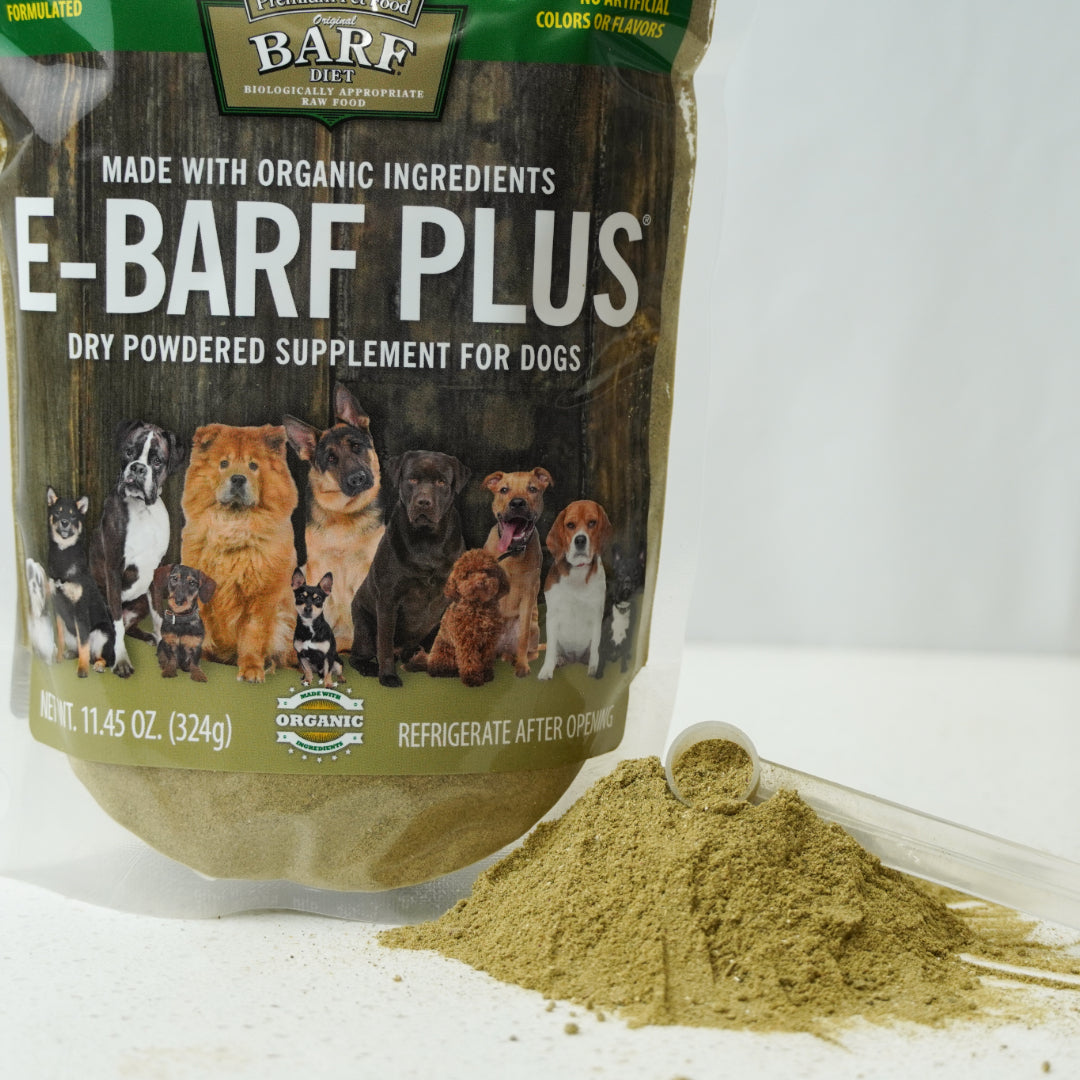
Your Pups With Bones. This new book has formalized
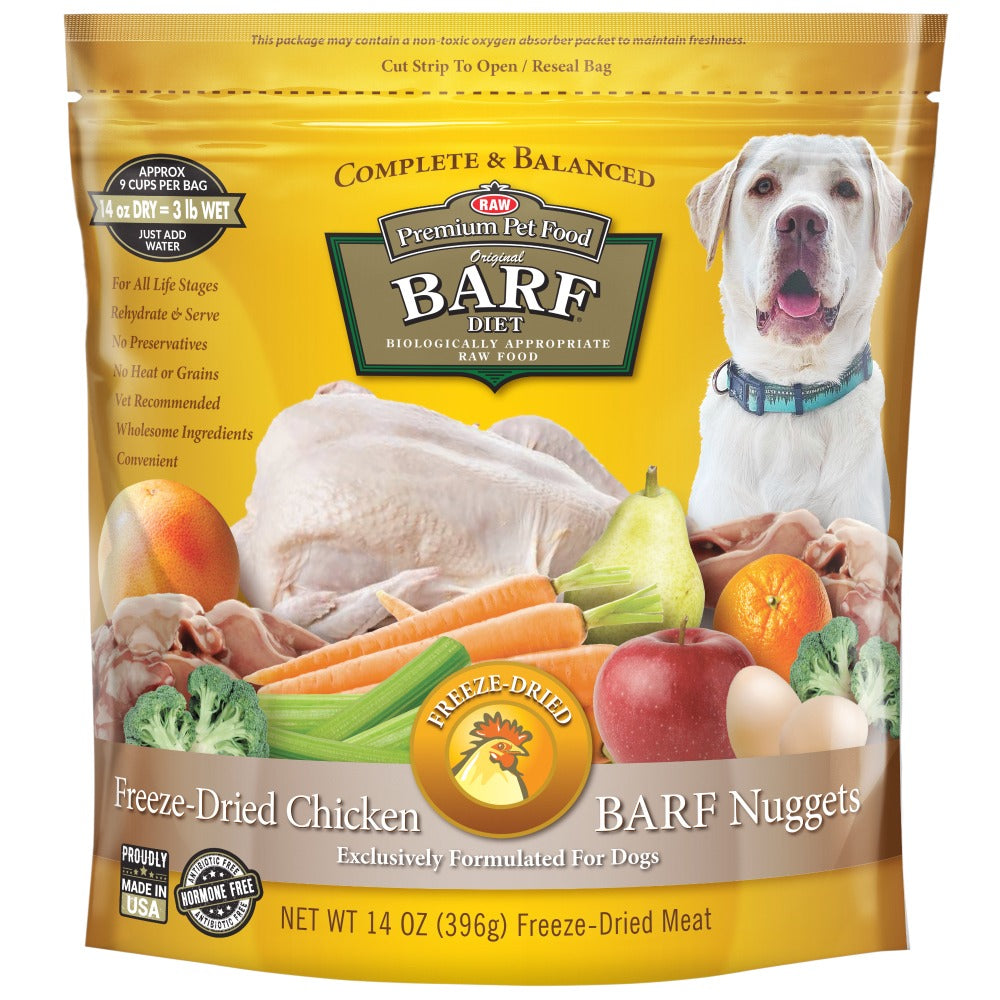
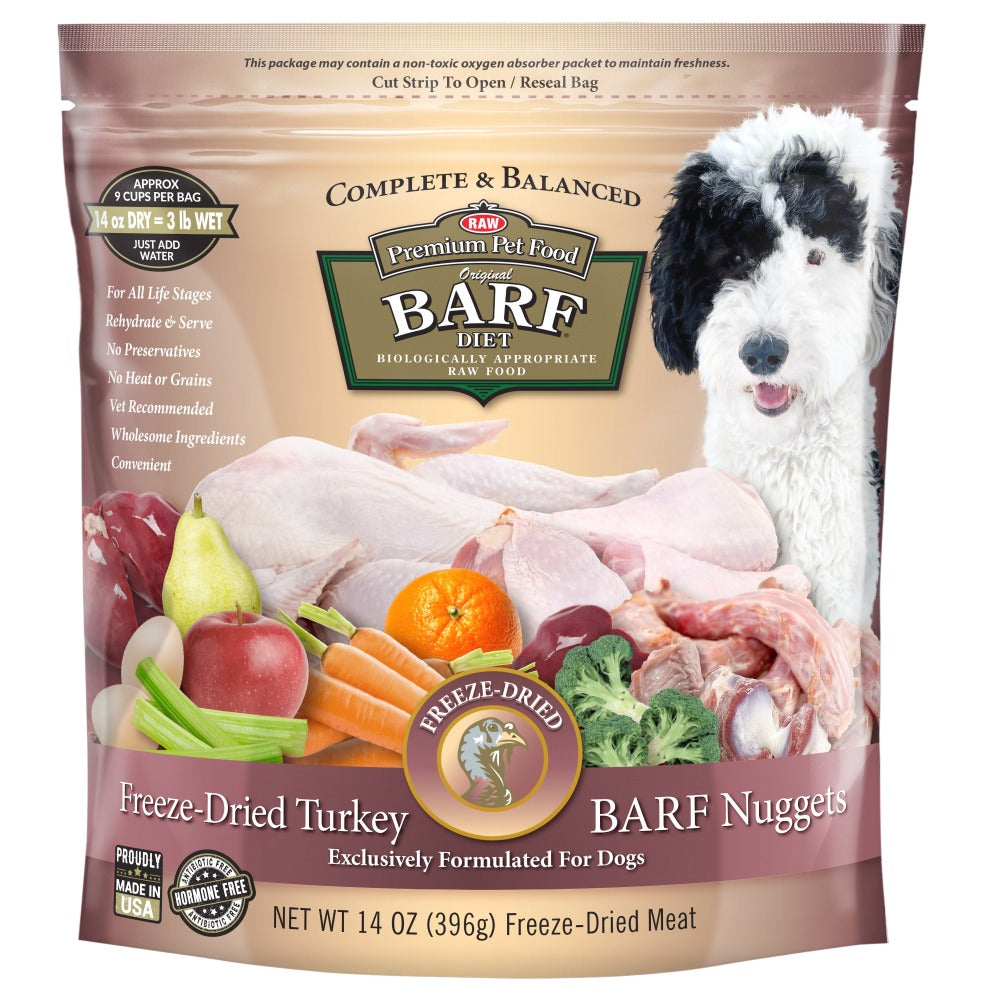
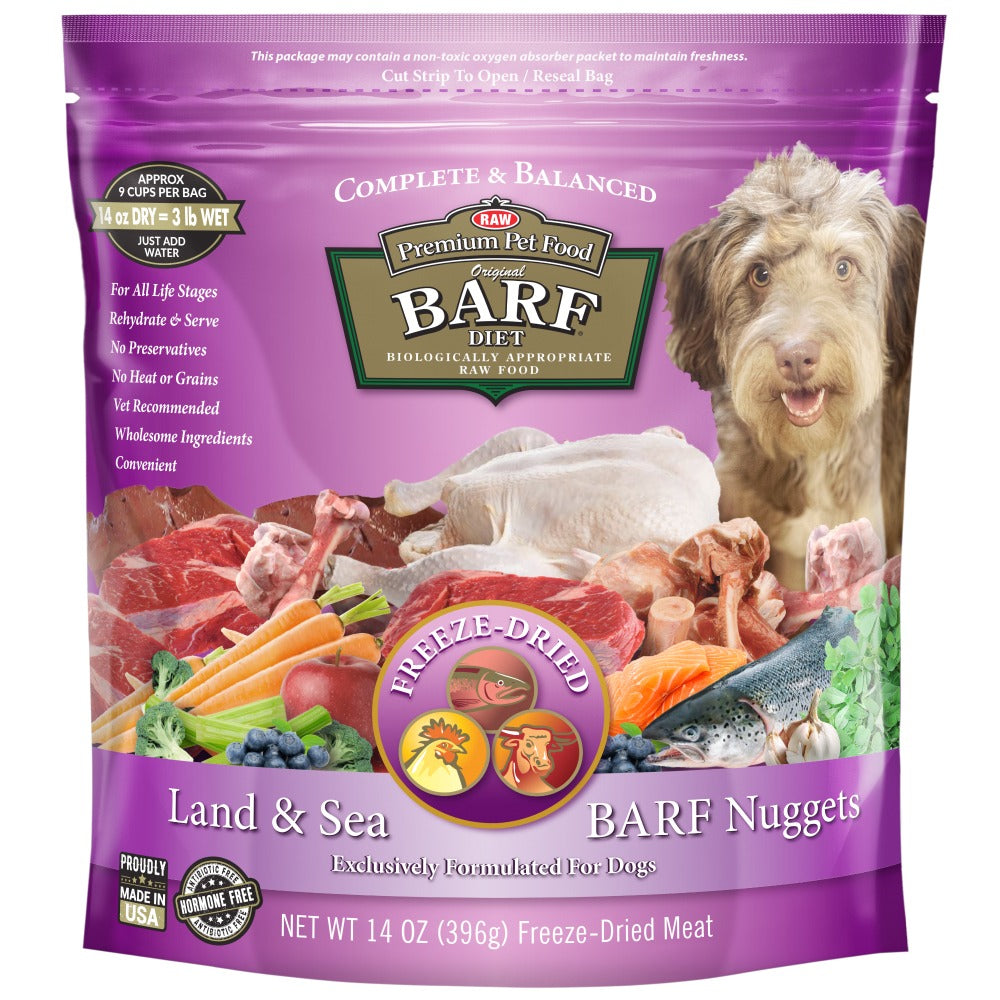
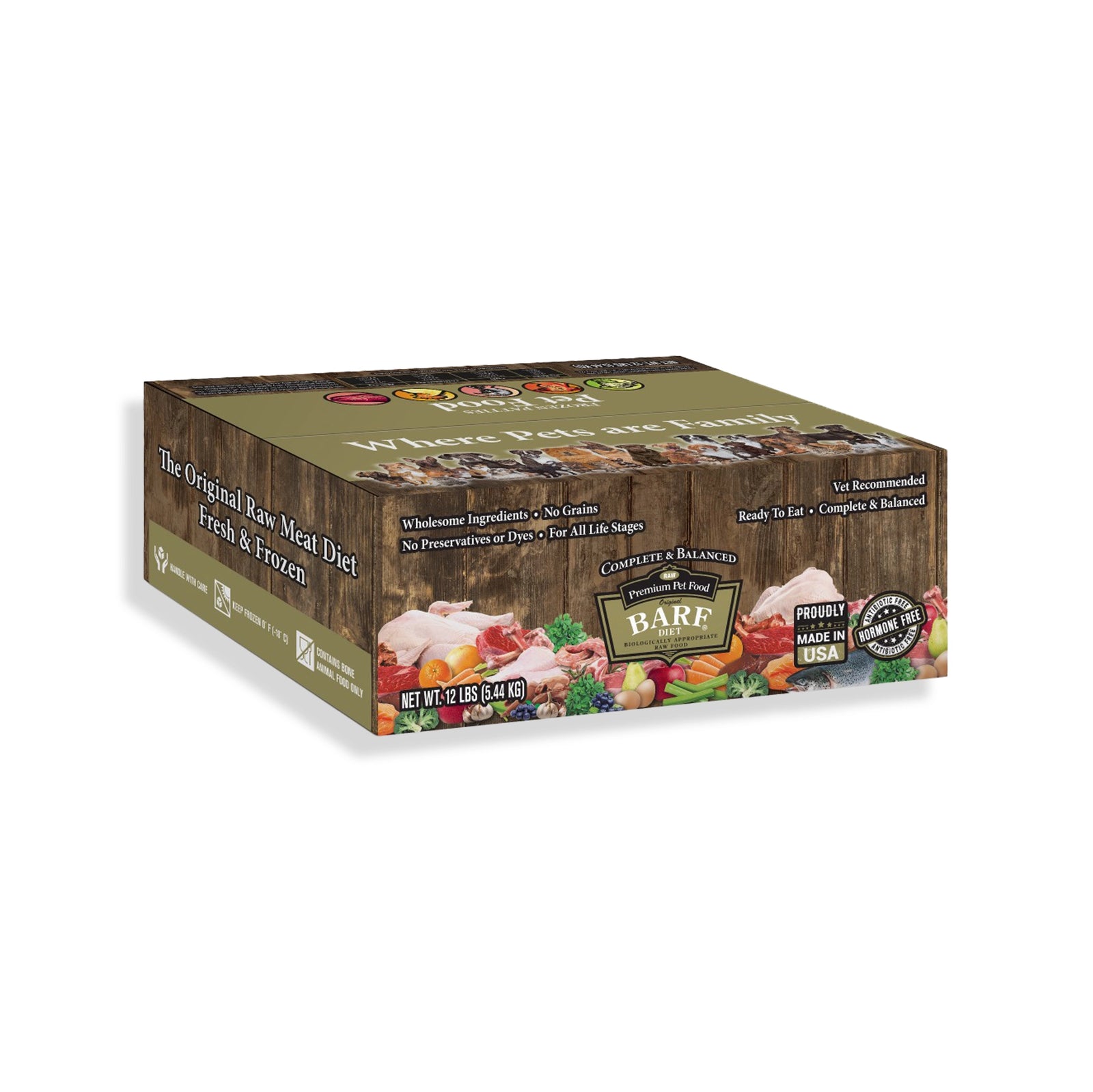
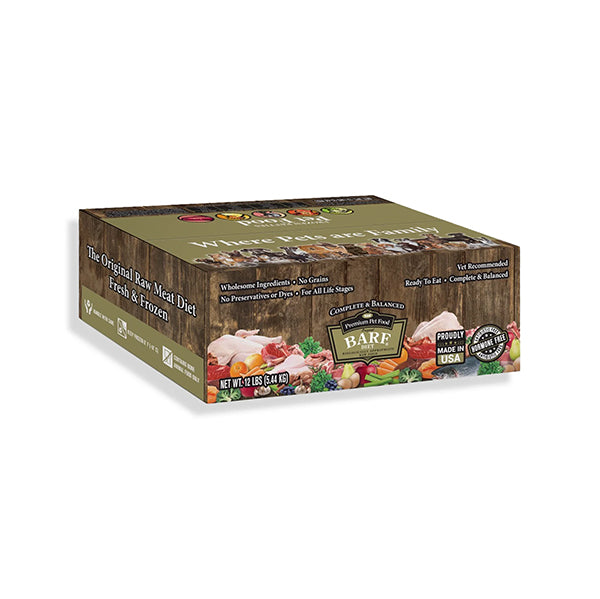
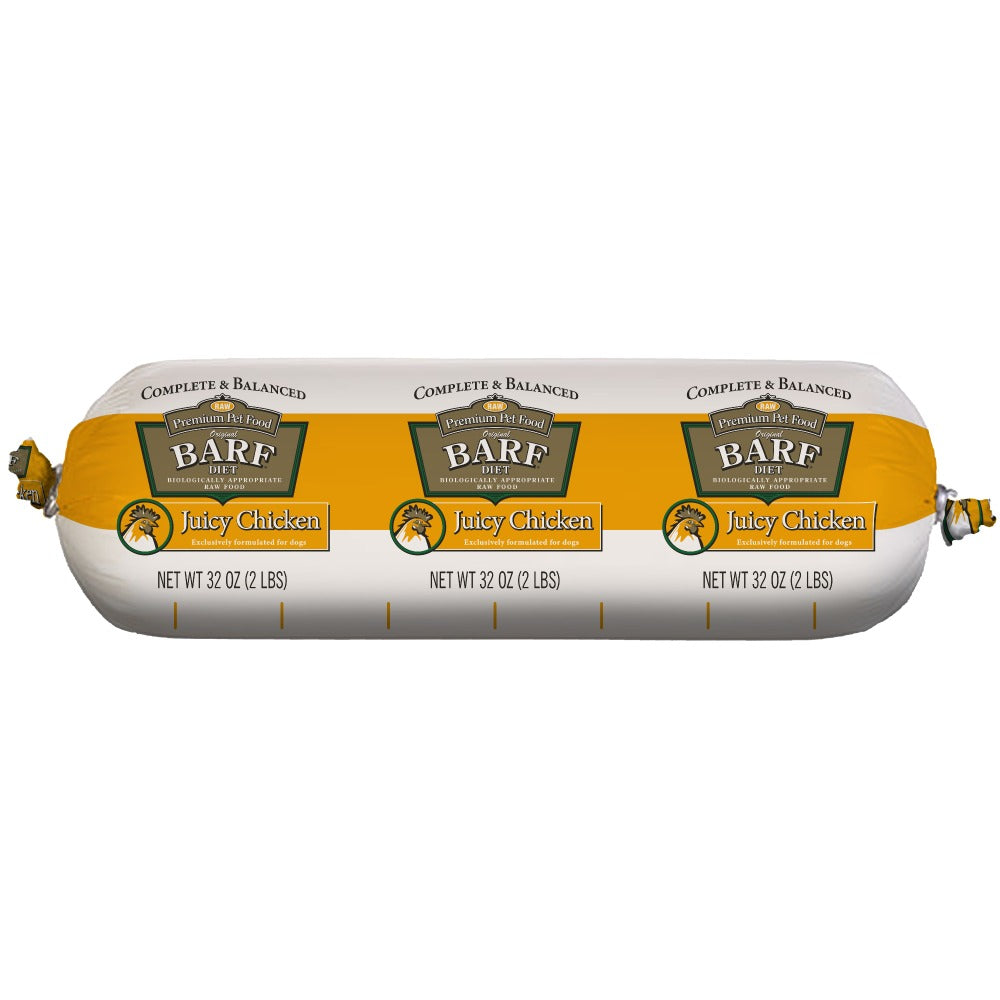
the concept of BARF, an acronym that stands for Biologically
Appropriate Raw (or Real) Food. I wrote this book for breeders
and the owners of large dogs. It covers feeding to prevent
(and treat) skeletal disease in growing pups and feeding for
breeding. When I wrote, Give
Your Dog a Bone I was confident it would be successful
in some limited sort of way. However, I had no idea that it
would start a revolution in raw feeding that would sweep across
Australia, England and more particularly North America the
way it has.
Dr Billinghurst lives with his wife Ros, on
a small farm on the outskirts of Bathurst, 10 minutes from
their surgery. Their family consists of 5 children, 3 dogs,
2 cats, 1 budgie, 5 geese and 17 cows. Life is a busy round
of working in their Veterinary practice, traveling, writing,
and gardening. Most of their spare time is spent dealing with
the many BARF inquiries. Theirs is a life of dedication, helping
pet owners both at home and throughout the world, restoring
health to their pets.
Let me wish you and your dog(s) -
GOOD HEALTH
|