
|
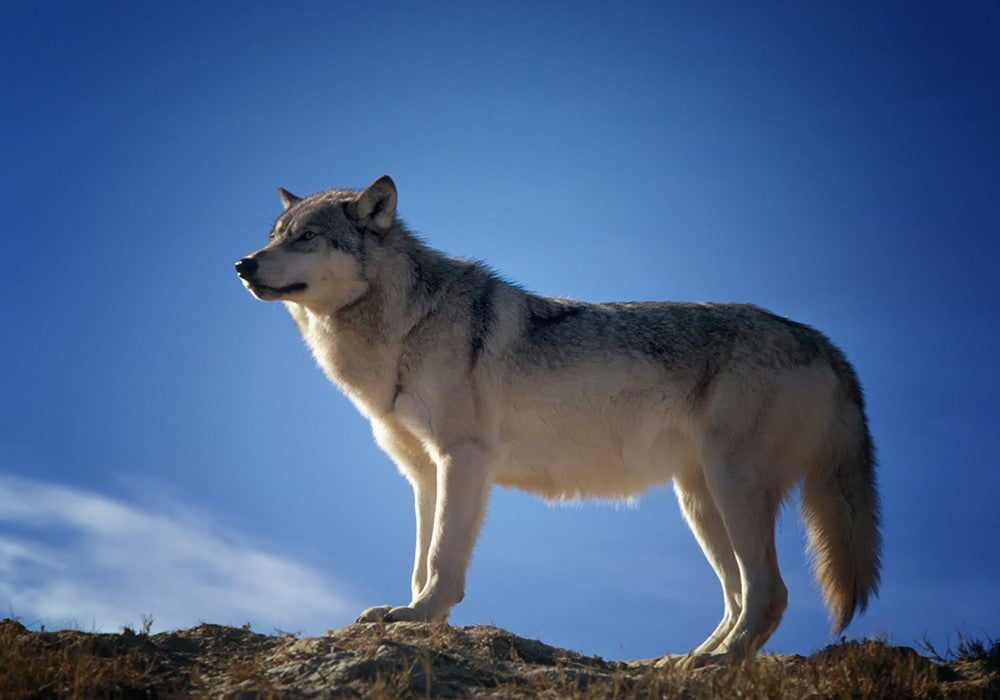
It is now generally agreed that the ancestor
of the modern dog is the wolf. What is not clear is how long
that domestication process has been going on. It may have
been as short as 10,000 years or as long as 50,000 years,
or possibly more. No matter how long it has been, that process
of domestication where our ancestors removed the 'wildness'
from the wolf, involved thousands of years of selective breeding.
They took an animal that could well have seen them as food,
and through selective breeding, produced an animal that became
their best friend.
In
this process, our ancestors produced hundreds of 'different
looking wolves.' These various "breeds" - as we
now know them - were and are developed for a particular task
or tasks. Whether it was hunting for large prey, exterminating
vermin, guarding, herding, being a companion or a foot warmer,
each breed fulfilled a set of needs in the society in which
it was developed.
The result is that each breed is not only
different to look at, but also has a unique mind set which
relates very much to the task(s) it was bred to perform. However,
our dogs also retain many of their wolf-like characters, including
their pack mentality. This includes the need to either lead
or be led. Today, as we train our dogs, we need to be aware
of both the unique mind set of our particular breed and the
basic pack mentality, the wolf-like traits, which still dominate
our dogs' thinking.
The point I am making
in regard to this discussion is that to produce the dog,
our ancestors made only two basic changes to the wolf.
They changed the wolf's appearance and they
changed its mind. What they did not change, was the basic
internal workings or or physiology of the wolf. There was
no need to. As a result, the basic workings or physiology
of modern dogs is no different or very little different to
their ancestor the wolf. Modern dogs grow and function (and
malfunction) in very much the same way as the wolf.
To produce a fully functioning adult dog,
our modern pup needs to grow in exactly the same way as the
wolf pup. If we vary the food and the exercise too drastically,
we will alter the finished product. We will produce damaged
goods.
To be more specific...
The basic environment which the modern dog requires in terms
of food and exercise is exactly the same as it was (and still
is) for the wolf. So although we have carried out selective
breeding to alter our dog's outward appearance and mind, we
have not asked it to cope with, nor have we selectively bred
it to deal with any dramatic change in feeding or exercising.
Until now.
Think about how wolves have survived
They have had no vets to radiograph their
hips and select sound breeding stock. There have been no progesterone
tests prior to breeding, no ultrasound to detect pregnancy,
no blood tests to ensure that health is perfect, no caesarians,
no injections after giving birth, no worming, no extra calcium,
no vaccinations or puppy checking, or treatment of problems.
There
are no dog food companies out there supplying them with super
premium foods. There is no one to make sure that their every
meal is complete and balanced. There is no one to make sure
they never eat egg whites. No one to protect them from eating
bones. No one to cook their food and to make sure they do
not contact dangerous bacteria such as E. Coli or Salmonella,
and most especially no one to ensure they receive the correct
ratio of calcium to phosphorus so that puppies will have perfect
bone growth. All the wolves have is themselves.
We have much to learn from the wolves
Wolves rely on their stamina and strength
to survive. Any animal unable to hunt or compete with the
others for food because of skeletal problems would certainly
not survive. The free moving healthy looking wolves I have
observed, appeared to have perfect bone and joint health.
Why are the wolves - without the 'benefits' of modern veterinary
technology, without truckloads of super premium dog food,
and without calcium supplements - doing so well? The answer
is very simple. They are living in a biologically appropriate
environment in terms of food and exercise. They are getting
what they need. They have no need of modern technology. By
contrast our dogs are not receiving what they need in terms
of diet and exercise. Despite our technology. .....our dogs
are doing badly!
Let us go on and examine the lifestyle of
a group of wolves. The lifestyle of any group of wild dogs.
That lifestyle will show us the basic principles which we
should use to determine how dogs should be fed and exercised
today, for maximum present and future health. You will discover
that such a diet is simple, straightforward, and uncomplicated.
Just like the lives of those wolves.
First, the eating...
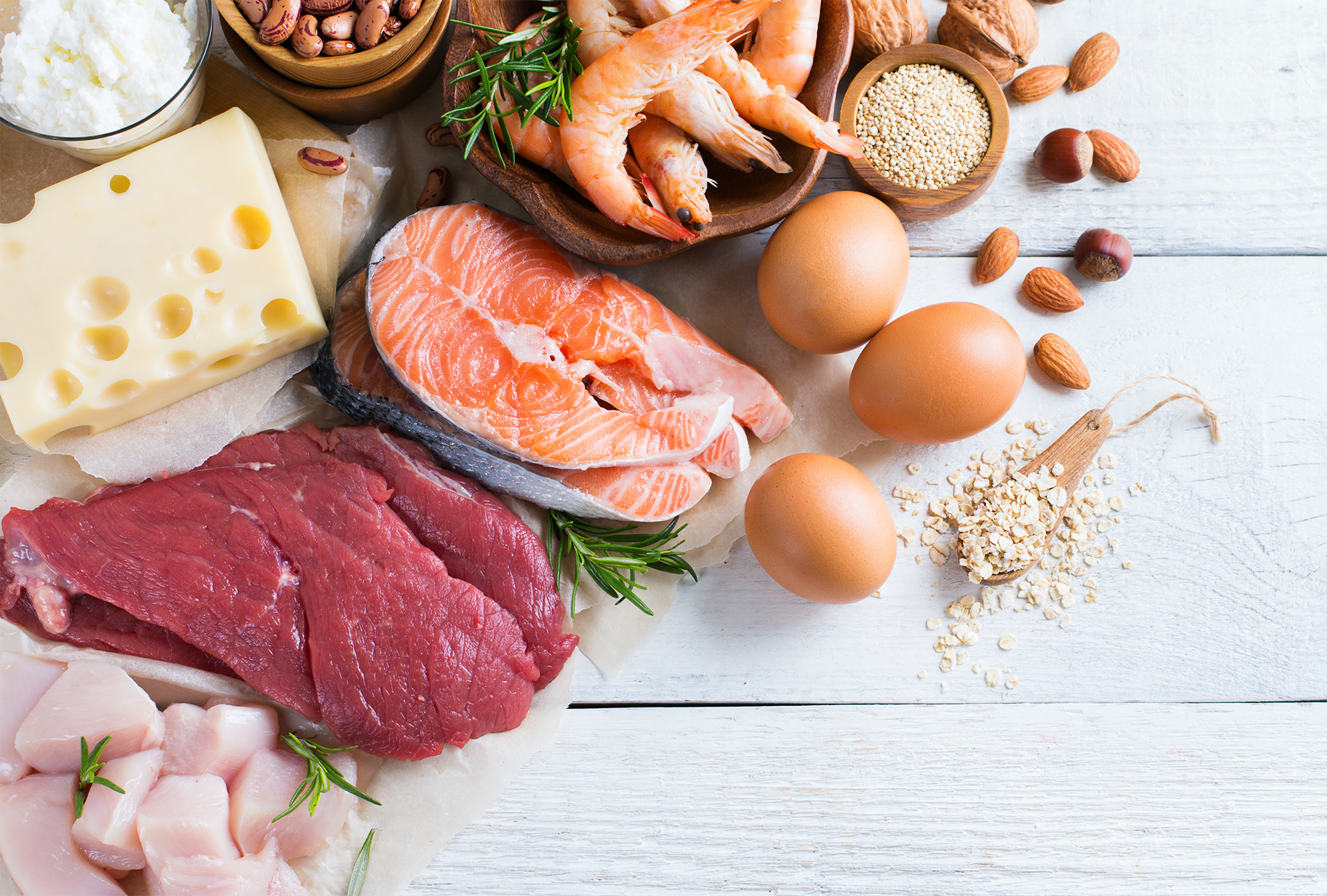
Wild dogs do not eat regular meals. Nobody plans their meals.
Nor do they have an all meat diet. On the other hand, no one
single meal is complete and balanced. Raw bones with meat
are a major part of their diet. Lots and lots of it! In the
winter they dig up and eat frozen food. They eat offal such
as liver and heart. They eat raw eggs. They eat decaying material.
Food that is slightly off.
They
may eat once a day or five or six times a day, depending on
the season and what sort of food is available. They have days
when they go hungry. They have days when they pile food into
themselves almost beyond capacity. They eat when food is available,
and as the urge takes them. They eat a wide variety of foodstuffs.
Insects, bark, soil, birds - complete with their tiny bones
and feathers - whatever. Every meal they eat is totally raw.
Not one skerrick of it is cooked. Ever.
They eat vegetables including herbs, from
the gut of their prey. This vegetable material is raw, totally
crushed and partly digested. They eat feces. A wolf's diet
contain almost no grains. Wolves never eat cooked grain. In
eating the intestinal contents of their prey they will eat
some grain which is usually immature and green. Most certainly
they do not eat a totally grain based diet like the modern
dog, subjected to a lifetime of dried dog food. Even if their
prey had been eating mature seed heads, by the time the wolf
pup or adult gets to eat this grain, it has been ground to
a paste and soaked in the juices of the herbivores intestines.
A totally different product to the masses of cooked and processed
grains fed to dogs today. Not only that, these few grains
are mixed in with a mass of other grassy and herbaceous material.
For a wolf - not one
single meal consists of dry dog food.
They don't eat canned dog food either.
Feeding for Weaning
As tiny pups, still with their mother, the wolf pups are well
looked after. After weaning things change dramatically. However,
before we tackle that, let's look at the weaning process itself.
This deserves our attention as it has important lessons for
how we wean our pups today. Wolf pups are not weaned using
cereals or bowls of milk or mushed up dried or canned dog
food, or bread soaked in milk. From the moment the weaning
process begins, the wild pup begins a diet which is based
on the carcasses of other animals - mostly herbivore.
Mum begins the process by vomiting. She vomits
up food for the pups, starting when they are three to four
weeks of age. These young pups crunch their way through and
eat any tiny or soft bones, they rip and tear at the meat
attached to larger bones, and they suck and chew at the organ
meats swimming in a sea of fermenting totally crushed vegetable
material. All totally raw. They also eat whatever they can
scavenge from left over carcasses left lying around their
immediate vicinity. This includes - once again - raw meaty
bones and bits of liver and raw partly digested totally crushed
and sometimes fermenting vegetable material.
The young pups
are not protected from feces...
With its E. coli or Salmonella or Campylobacter or a myriad
of other bacteria or protozoa. Instead, they eat it and develop
healthy immune systems, well able to deal with the normal
bacteria and other micro-organisms in their environment. In
addition, they are able to - and of course have to- build
a resistance to intestinal worms.
When weaning time comes around, do your pups
enjoy similar 'advantages'? The question is how far should
we adapt these principles as we rear our pups today? Certainly
I am not suggesting we should allow our pups to be wormy or
to be needlessly exposed to high levels of pathogenic bacteria
by feeding meat that is rotten or anything like. They should
not however, be totally protected from such things. Their
food must be raw. I am strongly suggesting that what young
wolves or dingoes or foxes eat, deserves our very close attention.
This is what we need to duplicate.
Once wild pups
are weaned...
They don't join in the serious hunting, but of course they
do a lot of "play-hunting". Insects, lizards, rodents,
whatever moves is fair game. They may even catch and eat some
of these. This is important. Not for what they are eating
so much, but more for how they are being exercised. Those
few lines contain the vital information on which to base the
exercising of modern pups.
Wolf
pups mainly eat at the family dinner table. That is, they
share in whatever the older wolves have dug up, hunted or
scavenged. However, even this food is not easily won. When
mum looked after them the young wolves had a degree of protection.
After weaning it is a different story. They are no longer
pampered or cosseted. No more favorable treatment. The pups
have now plummeted to the bottom of the social heap. Instead
of being number one when meal time comes, when the hunt is
over, when that old or frozen carcass is dug up or discovered,
the young weanlings as the lowest members in the social order
are last in to the feast. They have to fight for every morsel
and scrap of food they get. 'Manners' for a wolf pup consists
of not eating until the older wolves 'allow' them. That is,
when all the others have had their fill. The pups then have
to fight amongst themselves, until they too have established
an order of dominance.
Because the wolf pups only get to eat the
leftovers, most of the choice bits have gone. So what is left
for them? There will be bones with scraps of meat, little
bits of organs such as liver, heart, spleen, etc., that the
adults in their ravenous haste missed. Lots and lots of gut
contents, consisting of masses of plant material, raw, crushed
and fermenting.
Because wolves and other wild dogs follow
the herd of deer, bison, antelope, etc., pulling down the
young, the old, the injured and the sick, one of the foods
always available for them is the feces of the animals they
follow. This is an important part of their diet. They actually
require those healthy bowel bacteria. That is why modern dogs
seek out and eat feces. Their own, other dogs', cats' feces
- whatever they can obtain.
The habit of eating feces supplies a young
pup with first class protein, essential fatty acids, masses
of vitamins and plenty of healthy fiber. Research tells us
that feces eating by the young of many species plays an important
role in bowel and brain health. The bacteria in feces help
in the development of the immune system of the bowel and undoubtedly
assist in the prevention of such problems as inflammatory
bowel disease. The essential fatty acids present in feces
have been shown to play a vital role in the full development
of the central nervous system, particularly the higher functions
of the brain. This is something we have to take very seriously.
Poor brain development could well be one of the factors behind
much of the unprovoked aggression we are seeing in modern
dogs fed processed food.
I am not suggesting that our pups should necessarily
eat feces - although in the countryside, young teenage and
adult dogs certainly do eat plenty of nutritious and healthy
cow, sheep, rabbit, horse, and other herbivorous feces. What
I am saying is that we must find suitable substitutes for
our dogs today. This is the basis on which we may confidently
supplement our young pups' diet with yogurt and other sources
of probiotic; vitamins; healthy clays; essential fatty acids
from fresh, cold extracted oils and first class protein such
as egg yolks - all combined with raw crushed vegetable material.
"Although we humans
have changed the appearance and the nature
of the dog in all sorts of ways by domestication, we have
not changed
it's basic internal workings. In other words, today's domestic
dog has
essentially the same digestive system and overall physiology
as it's ancestor the wolf"
Wolf pups do
not eat at regular times
The food supply is not regular. They are not spoon fed. They
have to battle for their food. Obviously the food needs to
be adequate for survival and healthy growth. However, it is
very rare that their hunger is ever fully satisfied. These
pups are lean and hungry most of the time. There are periods
when they may go for twelve or more hours without food. As
a result, they are not fat and roly poly. They never grow
at their maximum growth rate. As a result they grow slowly.
It is not biologically appropriate for a wolf pup to grow
at its maximum pace. There is at least one very simple reason
for this. A wolf pup raised at top speed will develop skeletal
problems!
The
pups do not get to eat a lot of fat. Wild game is always very
lean. The relatively small amount of fat which is present
is not saturated, but full of essential fatty acids. Quite
different to the fat found in modern farm fed livestock; saturated
and lacking in essential fatty acids. The pups mostly miss
out on the fat because the adult hunters will preferentially
eat it first. The pups get most of their essential fatty acids
from their habit of eating feces and gut contents - chewed
up vegetation.
The older wolves will always eat until they
are absolutely jammed full of food, go back to camp, vomit,
and then eat their vomit at a more leisurely pace. Naturally,
little bits of this mixed up mess of food are left and the
pups can dart in and grab bits and pieces of it. In the process
they also eat bits of dirt and leaves and sticks etc. Soil,
grass and other fresh plant material are also eaten by these
hungry wolf pups quite deliberately.
What about dogs in the 'Pre-Pet-Food'
era?
How were they raised? The answer to that is
- not too differently to wild dogs. Of course they did not
have to hunt for their food. For most domestic dogs in the
'pre-pet-food era', much of their diet was still composed
of raw meaty bones together with other food scraps. Most importantly,
the bulk of that food was raw. This diet definitely included
plenty of vegetable material. Not always raw however.
These dogs were not overfed. This is because
everybody was very relaxed about feeding dogs. It was simple
and straightforward. Everybody knew how to do it and trusted
their instincts. There was no drama if they forgot to feed
the pups. They would have scavenged something for themselves
anyway. Nobody was racing to produce the 'biggest, roundest,
fattest, most calcified, biggest-boned,'bestest', largest,
beautiest - dog - ever, in the shortest possible space of
time.'
The bottom line for these dogs raised in the
pre-pet-food era is that the degree to which they experienced
ill health reflected the degree to which their owners departed
from that biologically appropriate method of feeding and exercising
that nature developed over the hundreds of thousands of years
of the wolf's evolution.
|